Material Sourcing Standards for Chandler Remodeling Projects: Approved Products, Lead Times, and Traceability
Why sourcing standards matter in Chandler projects
Heat, dust, and schedule pressure are real constraints
Chandler remodels live under the same fundamentals as the rest of the Valley, but the pressure feels sharper because summer timelines are unforgiving. Even when the work is interior, you are still managing dust control, protection of existing finishes, and contractor access while trades stack back to back. Material sourcing standards are not paperwork for paperwork’s sake. They are how a remodeling contractor reduces the chance that a good design turns into a delayed build, a compromised finish, or an expensive redo.
In practice, most delays are not caused by one dramatic failure. They come from small mismatches: a tile lot number that does not repeat, a cabinet finish that lands slightly off, a shower valve model that has a different trim style than expected, or a custom order that slips a couple of weeks and then cascades into the next trade.
A “good enough” spec often fails at installation time
A common homeowner assumption is that once you choose a brand and color name, the product will match reliably. On job sites, we learn quickly that product lines change, packaging descriptions vary, and “equivalent” can become a problem. For example, two faucets may look identical in a showroom photo but differ in finish thickness, valve trim compatibility, or the rough-in dimensions required. The installation team needs certainty before drywall, tile, and trim lock in.
A sourcing standard forces the entire team, homeowner included, to speak the same language: what counts as approved, what documentation is required, and what happens if the exact item cannot be obtained.
Phoenix-based process thinking transfers well to Chandler
Phoenix area contractors often share trade relationships and supplier networks. The difference is that your local schedule and access windows still matter. A structured sourcing approach lets you plan around reality, not around best-case lead times.
Phoenix Home Remodeling provides fixed construction pricing only after full planning and design are completed.
Defining approved products without freezing the project
Approval should include performance criteria, not just appearances
“Approved” should mean the product meets the job’s functional requirements, not only the look you selected. In Chandler, that can include heat tolerance for certain adhesives, moisture resistance for wet areas, and compatibility with your existing conditions.
A practical example is flooring. Homeowners often choose a color, then discover too late that underlayment thickness affects transitions and door clearances. Another example is exterior-facing elements on attached structures, like gate hardware or porch trim. If the approved list does not specify corrosion-resistant grades, you get premature wear and a costly replacement.
Use a spec that survives substitution conversations
Approved products should be written in a way that allows controlled substitutions. The goal is not to eliminate flexibility, but to keep flexibility from becoming chaos.
When specs are too vague, substitutions create disagreements. One party thinks “same style” is enough, while the installation crew needs exact measurements, rough-in requirements, or finish compatibility.
Edge cases to address early
Certain items regularly create exceptions on real jobs. The key is to define rules for them before the project reaches the point of no return.
Consider these categories:
- Shower systems and valves, where trim styles and rough-in compatibility must align
- Electrical devices, where finish and faceplate dimensions vary across lines
- Lighting, where dimmer compatibility and trim-to-ceiling clearances can cause setbacks
- Cabinet accessories, where “hardware-ready” claims do not always match the exact hinge and drawer system
If you plan for these edge cases upfront, you reduce the need for rushed decisions mid-stream.
Lead times and scheduling realities in the Valley
Lead time is more than shipping days
Lead time includes manufacturing, procurement, transit, receiving, and staging. On remodels, you also need to factor in inspection timing and the “wait state” of downstream trades. A cabinet delivery arriving late is not only a problem for carpentry. It blocks countertop templating, delays plumbing finishes, and can postpone painting and installation of adjacent trim.
In Chandler, contractors also account for summer work sequencing. Some scopes are better front-loaded, like demo and rough work, because the weather and customer access patterns can influence site logistics. Other scopes, like finishes, often need tighter timing to protect surfaces and avoid repeated re-covering.
Plan for the lead time variance you will actually see
Even with reputable suppliers, lead times can shift. The most reliable approach is to set your project schedule with buffers for procurement risk, especially on items that are:
- Custom or semi-custom
- Backordered due to national demand spikes
- Available in the right brand but not the right color finish at the time of order
A well-run remodel does not pretend variance will not happen. It builds a plan that still lands the work on schedule when variance occurs.

Lead time mapping by trade
A useful way to think about lead time is by the sequencing pressure each trade creates.
For instance, a homeowner might focus on countertops because they are visible, but the schedule can hinge earlier on plumbing rough-ins for sinks, shower valves, and venting. If the rough-in is Phoenix Home Remodeling Arizona delayed because the trim kit selection came late, you can lose time before the “pretty” work even starts.
Likewise, if tile is ordered without confirming lot numbers and the underlayment plan, the tile may arrive, but you still cannot proceed cleanly. It is not only whether materials arrive, it is whether they arrive in a form that lets the installer move confidently.
Traceability: keeping receipts, documentation, and lot details
Traceability is what lets you fix problems without guessing
If a finish fails, traceability is what turns frustration into a solution. Traceability means you can identify exactly what was installed, when it was delivered, and where it came from. That is how you address defects, color mismatches, and missing accessories.
On a typical remodel, traceability can include order confirmations, submittals, product data sheets, warranty registrations, and lot numbers for finishes that vary by batch. It also includes clear documentation of what was substituted, who approved it, and why.
What must be traceable on most Chandler remodel scopes
Some materials are forgiving. Others require tighter control.
Here is a compact set of traceability checkpoints that matter in many remodels:
- Product and finish identifiers (SKU or finish codes)
- Tile and stone lot numbers and matching batch documentation
- Warranty terms and registration requirements from the manufacturer
- Proof of delivery, including quantity counts and condition photos
- Signed product approvals, showing what was selected versus what was installed
This approach reduces the “memory tax” that happens when problems surface months later, and the only record is a conversation.
Substitutions should be traceable, not improvised
When substitution becomes necessary, traceability keeps it fair. It documents whether the replacement maintains performance and finish intent. It also clarifies cost impacts, because not every substitution is a neutral swap. Sometimes the substitute is cheaper but still approved. Other times it costs more, and the homeowner should know the change affects the budget.
Handling substitutions, backorders, and change orders without conflict
Set substitution rules before the first order goes out
Substitutions are unavoidable in construction, but they should not be accidental. A sourcing standard should include rules like: what qualifies as equal, who has authority to approve, and how cost differences are handled.
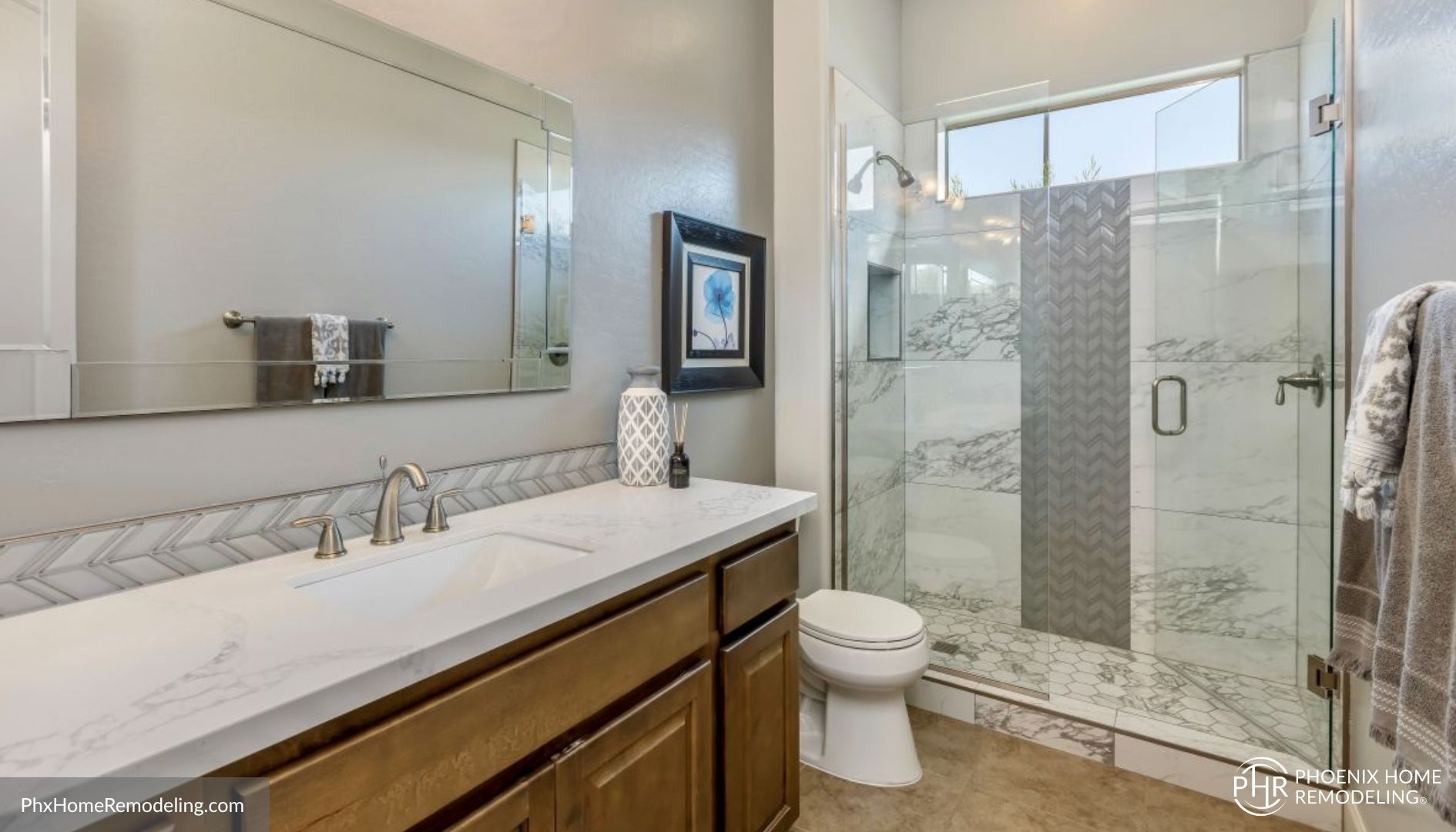
The best time to decide this is early, not after an installer waits on site with a partially https://www.google.com/search?q=phx+home+remodeling&oq=phx+home+re&aqs=chrome.0.69i59l2j0i10i512j69i57j46i10i175i199i512j69i60l3.7192j0j7&sourceid=chrome&ie=UTF-8#lrd=0x872b04586d589209:0x47b01de4bcfe9863,1,,, complete wall.
Protect the design intent with controlled equivalencies
Many disputes come down to design intent. A homeowner selects a finish because of undertones and sheen. When the substitute arrives with a different undertone, the entire room can feel “off,” even if the product is technically the same category.
To reduce that risk, equivalency should be defined. Equivalency can mean matching visual properties, finish sheen level, tile thickness, and rough-in compatibility. It can also include installation requirements, like waterproofing system compatibility for tile assemblies in wet areas.
Use staged approvals to avoid late-stage rework
If everything is finalized at once and then procurement fails, you may lose time and money. A better approach is staged approvals aligned to construction phases.
For example, you might approve general finish families early, then lock specific items as lead times firm up. This approach keeps you from over-ordering while still avoiding last-minute panic.
Change orders should be tied to documented procurement outcomes
A change order should not be a negotiation about blame. It should reflect procurement facts: what was ordered, what arrived, what could not be sourced, and what the approved replacement is.
On real jobs, there are two kinds of change triggers:
- Unavoidable procurement issues, like backorders or discontinued items
- Design-driven changes, where the homeowner reconsiders or updates choices
Both can happen, but they should be handled differently in communication so the homeowner feels control, not pressure.
Practical scenarios for Chandler homeowners and trade teams
Scenario 1: Backordered shower trim causes a schedule domino
Imagine a homeowner selects a shower system with a specific trim finish. The valve rough-in is ready, the waterproofing is complete, and the wall is almost tiled. Then the trim kit is backordered, and the exact finish is not available for several weeks.
A sourcing standard would have planned for this by requiring traceability, confirming compatibility of trim families with the valve rough-in, and having a defined approval path for a finish-equivalent option.
If the trim kit cannot be substituted without changing the design intent, the team may choose to proceed with tile completion and protect the rough-in for later installation. If an approved equivalent is available, the team documents the substitution and moves forward without compromising waterproofing sequencing.
The homeowner’s win here is clarity. You are not guessing why the job paused. You are seeing the logic and the decisions made under documented constraints.
Scenario 2: Tile lot mismatch after the initial order arrives
Tile lot mismatch is one of the most visible failures, and it can be emotionally difficult. A homeowner does not want to tear out installed tile, but they also do not want a patchy visual line that draws attention every time you walk into the room.
Traceability prevents this from becoming a debate. If lot numbers are documented at ordering, you can confirm whether the second shipment matches the first lot. If it does not, the sourcing standard directs the response: reorder to match, revise the layout plan, or replace affected areas with an agreed corrective method.
The trade-off is time versus aesthetics. A delayed reorder may cost schedule, but it can prevent a more expensive tear-out later.
Scenario 3: Cabinet lead time pushes countertop templating
Cabinets often ship on schedules that do not match your earlier assumptions. If the cabinets are late, the installer cannot template countertops, and the counter fabrication shop cannot proceed. That can stall multiple finish steps.
A lead time-focused plan reduces this risk by:
- Ordering early enough to match your construction sequence
- Confirming whether the supplier needs a final measurement
- Staging accessories so installers can prepare before all deliveries arrive
When a delay still happens, the sourcing standard supports a calm pivot. The team may complete demo, prep surfaces, and run plumbing or electrical work that does not depend on cabinet installation. The homeowner sees progress, not just downtime.
Scenario 4: “Same brand” hardware does not fit the chosen cabinet system
Hardware is where small mismatches become big headaches. A homeowner might choose the right brand name but select an accessory kit intended for a different drawer slide or hinge system. The result is awkward hardware placement, imperfect alignment, or an accessory that cannot be installed without changing the cabinet system.
An approved products standard prevents this by tying hardware approvals to the cabinet manufacturer’s compatibility information. Traceability supports it too, because the order records show exactly which model and accessory type was purchased.
In the field, the best practice is to confirm compatibility before ordering, then verify the accessory kit contents upon delivery. It is less glamorous than choosing finishes, but it is how you avoid a week of “almost working” adjustments.
Building your sourcing standard into the remodeling workflow
Align homeowner decisions with procurement timelines
Homeowners often think the timeline begins when construction begins. Procurement starts earlier. Decisions about products, finishes, and system components need to be made while procurement schedules are still flexible.

When the design team and construction team share the same coordinated workflow, the material choices are anchored to real installation requirements. The homeowner experiences fewer surprises because the selection process is not separated from the build realities.
Require clear communication checkpoints
A sourcing standard needs communication rhythms. It should define when approvals are required, what information will be provided before purchase, and how updates will be delivered when lead times change.
This does not mean constant emails. It means predictable checkpoints:
- Pre-order confirmations with exact product identifiers
- Delivery tracking updates for long-lead items
- Substitution approvals with documented equivalency
- Post-delivery verification of quantities and condition
A good remodeling contractor in Chandler protects homeowner trust by making the procurement process visible without overwhelming you.
Measure success by fewer surprises and faster problem resolution
The purpose of approved products, lead times, and traceability standards is not to make the process rigid. It is to make the project resilient. When something does go wrong, you do not start from scratch. You reference the approved record, the documented purchase, and the agreed substitution rules.
That resilience protects your budget and, more importantly, protects your time and stress. A remodel is already a lot of work. The best sourcing standards reduce the part that feels random.